
Open Source Insurance Software: Best Solutions in 2025
Choosing the right open source insurance software can feel like navigating a maze.
With so many options available, it’s important to find a solution that not only meets your technical needs, but also aligns with your business goals.
This article is designed to help you navigate the world of open source insurance software and make a more informed decision. Dive in and find out how the right open source software solution can mean a more streamlined and effective insurance process.
The Importance of Open-Source Software in Insurance Industry
The adoption of open source software by insurance companies represents an opportunity to create a more transparent, collaborative, and cost-effective technology environment for future operations.
Why it’s important?
Open source tools provide insurance companies with unparalleled flexibility to customize solutions to meet their unique business needs.
By tapping into the collective intelligence and innovation of global developer communities, insurance companies can improve services, streamline processes, and ultimately deliver more value to their customers.

Key Open-Source Software Solutions Worth Keeping Track Of
In the rapidly evolving insurance industry, staying abreast of technological advances is critical.
Below, we’ve listed key open source software solutions for insurance companies that stand out for their innovation, flexibility, and ability to address the complex challenges facing insurance professionals today.
Each tool offers unique features designed to streamline operations, enhance customer engagement, and improve overall efficiency.
Openkoda

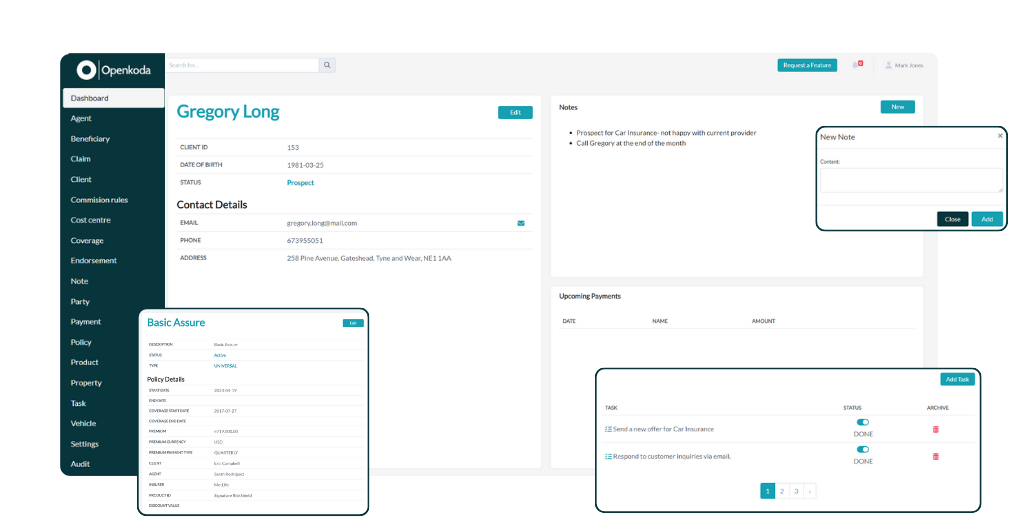
Openkoda is an open‑source core application platform for building custom insurance applications and products.
Built on a familiar Java 17 / Spring Boot 3 stack, it gives insurers a ready‑made foundation – authentication, multitenancy, role‑based security, dashboards, backups – so teams can start adding domain logic on day one instead of rebuilding plumbing.
Because every line is MIT‑licensed and sits on mainstream open‑source components (Java, JavaScript, PostgreSQL), insurers retain full control of the codebase, can host it anywhere, and avoid the classic vendor lock‑in that often accompanies proprietary low‑code tools.
That freedom matters in insurance, where long policy lifecycles and strict regulatory audits demand that carriers can inspect, customise, and keep running the software for decades on their own terms. At the same time, Openkoda’s library of insurance‑focused templates:
They short‑cuts the heavy lifting of data modelling, user flows, and UI scaffolding, letting carriers launch pilots or replace legacy components in weeks rather than quarters.
Key Openkoda Features
MIT‑licensed, open‑source core with unlimited users – no proprietary runtimes, no per‑seat fees, no lock‑in.
Pre‑built application templates: Embedded Insurance, Claim Management, Policy Management, Property Management, Time Tracking—importable as ZIPs.
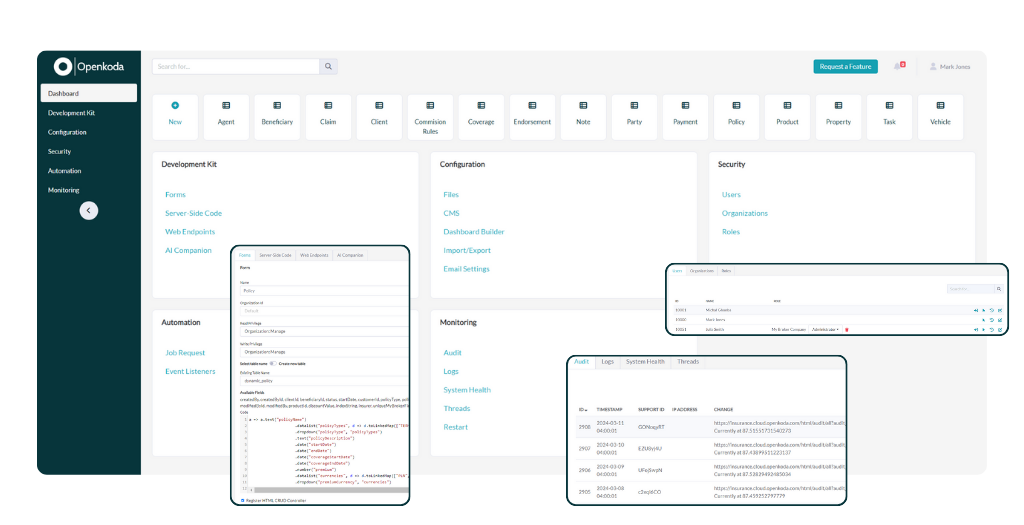
Enterprise application foundation: ready-made authentication, RBAC, advanced user admin, multitenancy, audit trail, file/resource manager, automated backups, and REST API.
Dynamic Entity & Data‑Model Builder: add or rename tables and fields through a visual UI, with instant UI + DB synchronisation.
Dashboard & Page Builder: drag‑and‑drop widgets, charts (Chart.js), and data tables to compose role‑specific workspaces.
Reporting AI: SQL report designer plus AI-generated SQL and natural‑language queries, with optional chart visualisation.
Insurance automations toolkit: email sender, in‑app notifications, PDF/Word/Excel generation, event listeners, and a cron‑style scheduler—all configurable from the UI or server‑side JavaScript.
Out‑of‑the‑box integrations with Slack, Discord, Basecamp, GitHub, Jira, Trello (open‑source tier) and Google, Stripe, LDAP, Microsoft Teams (enterprise tier).
Scalable multitenancy & clustering: shared‑schema, schema‑per‑tenant, or database‑per‑tenant models plus HA clustering options.
If you don’t have your in-house development team, don’t worry!
Whether you opt for a fully managed cloud environment or prefer to host the platform themselves, they gain direct access to Openkoda’s own engineers – specialists who know the codebase inside‑out and can shoulder the day‑to‑day development work.
A key accelerator is the library of ready‑made insurance templates (claims portals, policy administration modules, embedded‑insurance APIs and more).
Because 60‑70 % of the core functionality is already built and tested, the remaining customisation effort is far smaller than a ground‑up build, slashing elapsed time leading to far quicker ROI.
Intrigued?
Openkoda is an insurance open-source solution that’s available today!
SuiteCRM

SuiteCRM is open source customer relationship management (CRM) software that provides a 360-degree view of your customers and your business.
It enables the integration of CRM with core business systems, increasing productivity across the enterprise.
The platform is known for its freedom and flexibility, enabling customization to meet specific business needs.
[Read also: The Role of Digitization in Insurance Industry And Its Future]
InsurancePro CRM

InsurancePro CRM is designed as a software solution for life insurance agents, with an emphasis on a comprehensive and intuitive platform to manage various aspects of their work.
The project is developed using modern web technologies such as ReactJS and the MERN stack (MongoDB, Express.js, React.js, Node.js), which suggests that it will provide a dynamic and responsive user experience suitable for today’s web standards.
[Read also: Top Software for Insurance Brokers in 2025]
Develop Your Custom Software On Open-Source Tech Stack
What should your company do when none of the tools available on the market have the functionality you need?
The answer is custom software, and the insurance industry is one area where custom software can really make a difference and significantly improve business operations.
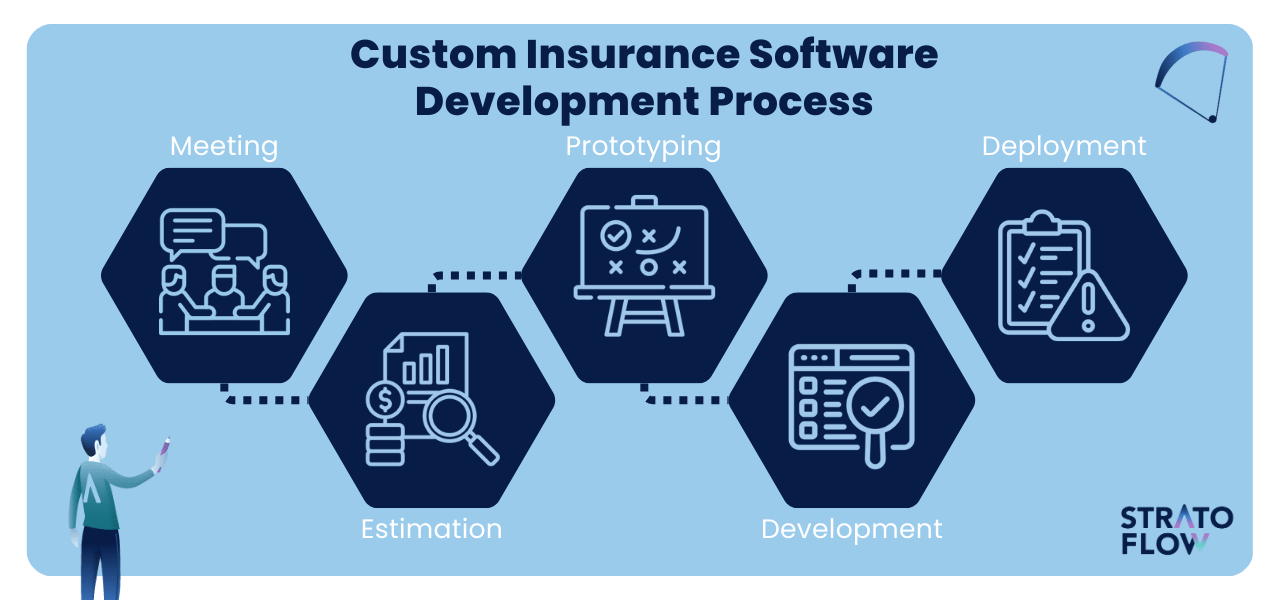
The need for custom software solutions in the insurance industry is largely driven by the vast number of niches in the industry, each requiring specialized functionality to address unique risks, regulatory requirements, and customer expectations.
But even when pursuing custom insurance software, it’s important to base the project on a solid and trusted open source technology stack.
The use of open source technologies in custom insurance software solutions offers significant benefits in terms of flexibility, security, and cost-effectiveness, but perhaps most importantly, it ensures that the technology stack will remain relevant for longer, minimizing the risk of dealing with outdated legacy software in the future.
Stratoflow – Your Custom Insurance Software Experts
Stratoflow is a leading custom software development company focused on delivering world-class insurance software solutions.
Our approach focuses on delivering customized, efficient, and flexible systems designed to improve insurance operations, streamline policy management, and enhance customer engagement.
We can build for you custom:
And many more other insurance software systems tailored specifically to your insurance business.
By leveraging innovative technology and deep insurtech expertise, Stratoflow’s custom software development experts ensure that its clients achieve significant operational improvements and rapid insurance agency growth.
Do you have your own idea for an insurance software system?
Contact us to see how we can turn your vision into reality!

Conclusion
Wrapping up, exploring the landscape of open source insurance software, including standout options like Openkoda, reveals a wealth of possibilities tailored to enhance insurance operations. The right choice can significantly impact your business, so consider these insights as a foundational step towards empowering your insurance services with the best open source solution.
Related Posts
Thank you for taking the time to read our blog post!

